








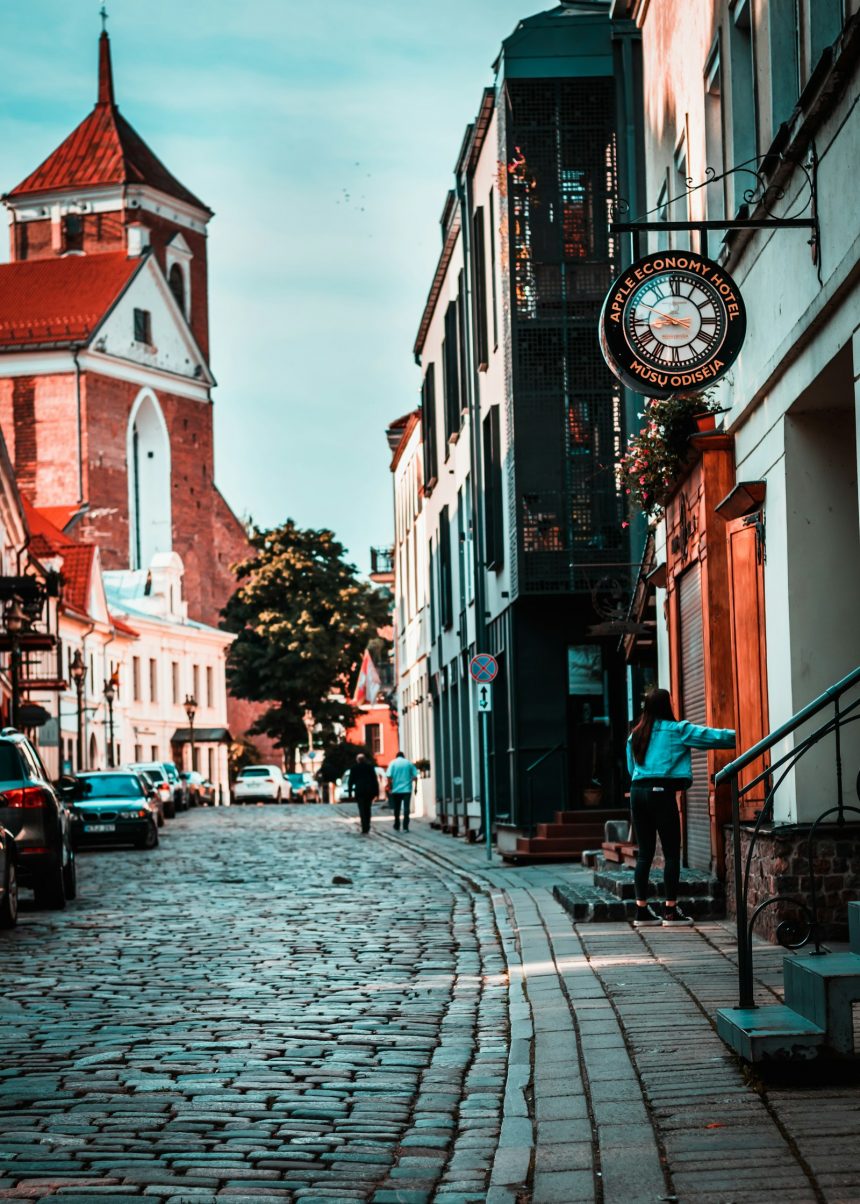
Most travel is designed around subtraction. You have a fixed number of days, a list of things you are supposed to see, and the whole exercise becomes an optimization problem: how many items can you cross off before the return flight. You come home with a camera roll and a vague sense that you were never quite present for any of it.
Slow travel inverts that. Instead of maximizing coverage, you maximize depth. You stay longer in fewer places, you let a routine form, and you accept that you will miss things. What you get in exchange is the part of travel that actually lasts: a working knowledge of how somewhere feels on a Tuesday morning, relationships with people who are not in the hospitality business, and a nervous system that has genuinely downshifted.
This is not a philosophy piece. Slow travel has real mechanics — how long to stay, how to book, what it costs, how to keep working if you need to — and most people who try it and bounce off do so because they got the logistics wrong, not because they disliked the pace. What follows is the practical version.
What Slow Travel Actually Means
The common definition — “travel slowly” — is useless because it does not tell you what to change. A more workable definition: slow travel is any trip where your average stay per location is long enough that you stop being a visitor and start being a temporary resident.

In practice that threshold sits somewhere around a week, and it gets much more pronounced at three or four. Under a week you are still in logistics mode: figuring out the transport, the neighborhood, where to buy groceries. Past a week, that overhead is paid off and everything after it is surplus.
The economics point the same direction. Transport is usually the most expensive and most exhausting part of any trip, and it is a fixed cost per move. Cut the number of moves in half and you have cut a large slice of both your budget and your fatigue without shortening the trip at all.



The cost of a trip is driven less by how long you go than by how often you move.
What It Is Not
Slow travel is not the same as budget travel, though it tends to be cheaper. It is not the same as digital nomadism, though the two overlap. And it does not require you to be unemployed, wealthy, or childless. Plenty of people do slow travel in two-week blocks once a year, in one place, and get most of the benefit.
It also is not about being precious. You are allowed to visit the famous museum. The difference is that you visit it on a weekday afternoon because you have time, rather than queuing at opening on your only full day.
Why the Fast Version Stops Working
There is a specific failure mode in compressed travel that most people recognize once it is named. You arrive, you spend day one disoriented and tired, day two doing the headline attraction, day three starting to relax, and on day four you pack. The relaxation curve and the trip length are mismatched. You leave right at the point where the trip was about to start working.
The second failure mode is decision fatigue. Every new city resets your defaults. Where do I eat, how does the transport card work, is this neighborhood the one that is fine at night. In a five-city trip you pay that cost five times, and by city four you are making worse choices and enjoying them less.

Third, and least discussed: fast travel produces shallow memories. Experiences that are novel but undifferentiated blur together. Two weeks in one town produces more distinct recall than two weeks across six towns, because your brain has hooks — the same barista, the route you learned, the market on Thursdays.
How Long to Stay, and Where
Choosing a Length
There is no universal number, but a few tiers behave differently enough to be worth naming.
- Three to four days. A stopover. Fine for a single city with one clear reason to be there. Do not pretend this is slow travel; just do it efficiently and move on.
- One to two weeks. The entry point. Long enough to develop a routine, find a regular cafe, and have one or two unplanned days. This is where most people should start.
- One month. The sweet spot for cost and depth. Monthly rates on apartments are dramatically lower than nightly rates, and a month is long enough to join something — a gym, a language class, a running club.
- Three months or more. Diminishing returns unless you are working or studying. Visa rules also start to bind hard here for most passports.
A useful planning heuristic: for any trip, count your travel days as lost days. If a five-city itinerary has four internal moves plus arrival and departure, you have spent roughly six days in transit. Ask whether the remaining days justify it.
The One-Move Rule
If you are new to this, try a trip with exactly one base. No internal moves. Take day trips out and come back to the same bed. This single constraint does more to change the character of a trip than any amount of intentionality.
Where to Stay, and How to Book It
Accommodation is the highest-leverage decision in slow travel, because you will spend more waking hours there than a fast traveler ever does. Hotel rooms that are perfectly adequate for three nights become oppressive at three weeks.
What actually matters for a long stay:
- A kitchen. Not because you will cook every night, but because the option changes your relationship with the place. You shop where locals shop, you learn the produce, and you stop eating restaurant food three times a day.
- Natural light and a real desk. If you are working at all, a bad chair and a dark corner will end the trip early.
- A residential neighborhood, not a tourist one. Tourist districts are optimized for people who leave. Residential ones have laundromats, hardware stores, and normal-priced coffee.
- Laundry access. This sounds trivial and is not. It is the difference between packing for a week and packing for three months.
- Reliable internet, verified. Ask for a screenshot of a speed test if you need to work. Listings routinely overstate this.
On booking: short-term rental platforms usually apply steep discounts at the weekly and monthly thresholds, so a 28-night booking can cost less in total than 21 nights. Always compare. Beyond that, local rental agencies, university housing boards, and expatriate community groups often have better inventory at better prices than the big platforms, though they require more effort and more caution.
A practical hedge for long stays: book the first three or four nights on a flexible platform, arrive, look at neighborhoods in person, then book the rest. You will make a far better choice with your feet on the ground than from a map.
Money: Why Slower Is Usually Cheaper
People assume a longer trip costs proportionally more. It usually does not, because the cost structure changes shape.
| Cost | Behavior on a short trip | Behavior on a long stay |
|---|---|---|
| Transport between places | Large, repeated | Paid once, amortized |
| Accommodation per night | Nightly rate | Weekly or monthly rate, often far lower |
| Food | Mostly restaurants | Mix of groceries and eating out |
| Attractions | Concentrated, high spend | Spread out, more free time |
| Impulse spending | High — scarcity mindset | Lower — you can come back tomorrow |
That last row is underrated. Short trips create artificial scarcity, and scarcity makes you spend. When you know you have three more weeks, you do not buy the overpriced thing because it is your only chance.
The honest counterweight: a long trip has a longer tail of ordinary living costs, and you still pay rent or a mortgage at home unless you sublet. Slow travel is cheaper per day, not cheaper in total. Budget accordingly.
Working While You Travel
If you have location-flexible work, slow travel is far more compatible with it than fast travel, which is essentially incompatible. But it takes deliberate structure or the work quietly eats the trip.
Split the Day, Not the Week
The common mistake is planning to “work in the mornings and explore in the afternoons” without defining either. A better version: pick fixed working hours, in a fixed place, and treat them as non-negotiable. Everything outside them is genuinely yours. Ambiguity is what causes people to spend a month somewhere and see nothing while also doing mediocre work.
Handle Time Zones Before You Book
A three-hour offset is manageable. An eight-hour offset with a team that expects same-day responses is a different job. Decide in advance which meetings you will keep, tell people your hours before you leave rather than after, and be honest with yourself about whether the arrangement is sustainable for the length of the stay.
Have a Second Place to Work
Working from the same apartment every day for a month produces the exact cabin fever you were trying to escape. Find a cafe, a coworking space, or a library within walking distance and rotate. The change of scene is doing real work for your attention.
Getting Below the Surface
Length alone does not produce depth. You can spend two months somewhere and remain entirely inside a bubble of other foreigners. Depth comes from repetition and from having a reason to talk to people.
The highest-return moves are usually mundane:
- Pick regulars. One cafe, one bakery, one market stall. Go often enough to be recognized. This single habit generates more genuine local contact than any tour.
- Join something with a schedule. A class, a club, a weekly game. Recurring commitments create relationships in a way that one-off encounters do not.
- Learn a hundred words. Not fluency — greetings, numbers, please, thank you, and the food vocabulary. The effort is noticed and it changes how you are treated.
- Walk the same route in different directions. You will notice a place properly on the fourth pass, not the first.
- Have one unplanned day a week. Not a rest day with a list. A genuinely empty one.
Resist the urge to fill the calendar just because you have more time. The empty space is the product, not a scheduling failure.
The Practical Objections
“I Only Get Two Weeks of Vacation”
Then do two weeks in one place. The core mechanic — fewer locations, longer stays — scales down completely. A fortnight in a single town, with a rental and a kitchen, is a genuine slow trip. A fortnight across five cities is not.
“I Will Get Bored”
Some people do, for about three days, usually in the second week. It passes, and what is on the other side of it is the actual point. If you are still bored after a week, you probably chose a place with too little to do rather than too much time.
“I Have Kids”
Slow travel is arguably easier with children, not harder. Fewer transitions, a kitchen, a washing machine, and a routine are exactly what family travel needs. The constant repacking of a multi-city trip is what makes traveling with kids miserable.
Frequently Asked Questions
How far in advance should I plan a slow trip?
Book the flights and the first week of accommodation early, especially in high season. Leave the rest open. The value of slow travel comes from the ability to change your mind once you are there, and a fully pre-booked itinerary throws that away before you land.
Is slow travel realistic on a limited budget?
Often more realistic than short trips, because the expensive parts — flights and frequent transport — are spread across more days. The constraint is usually available time off and ongoing costs at home, not the daily spend abroad. Run the numbers on a per-day basis rather than a per-trip basis and the comparison becomes clear.
What about visas and legal stay limits?
This is the real constraint for stays beyond a month, and rules vary enormously by passport and destination. Check the official requirements for your nationality well before booking, including whether remote work is permitted on the entry category you plan to use. Do not rely on travel forums for this.
Start With One Move Removed
The most common way people try slow travel is by planning an elaborate three-month itinerary, which is just fast travel stretched out. The better start is smaller: take the trip you were already going to take and delete one destination. Give those days to the place you liked most.
Do that once and you will feel the difference immediately — not in some abstract way, but in how tired you are on the flight home and how much of it you can still describe six months later. Slow travel is less a lifestyle than a single repeated decision to stay put a bit longer than feels efficient. The efficiency was never the point.